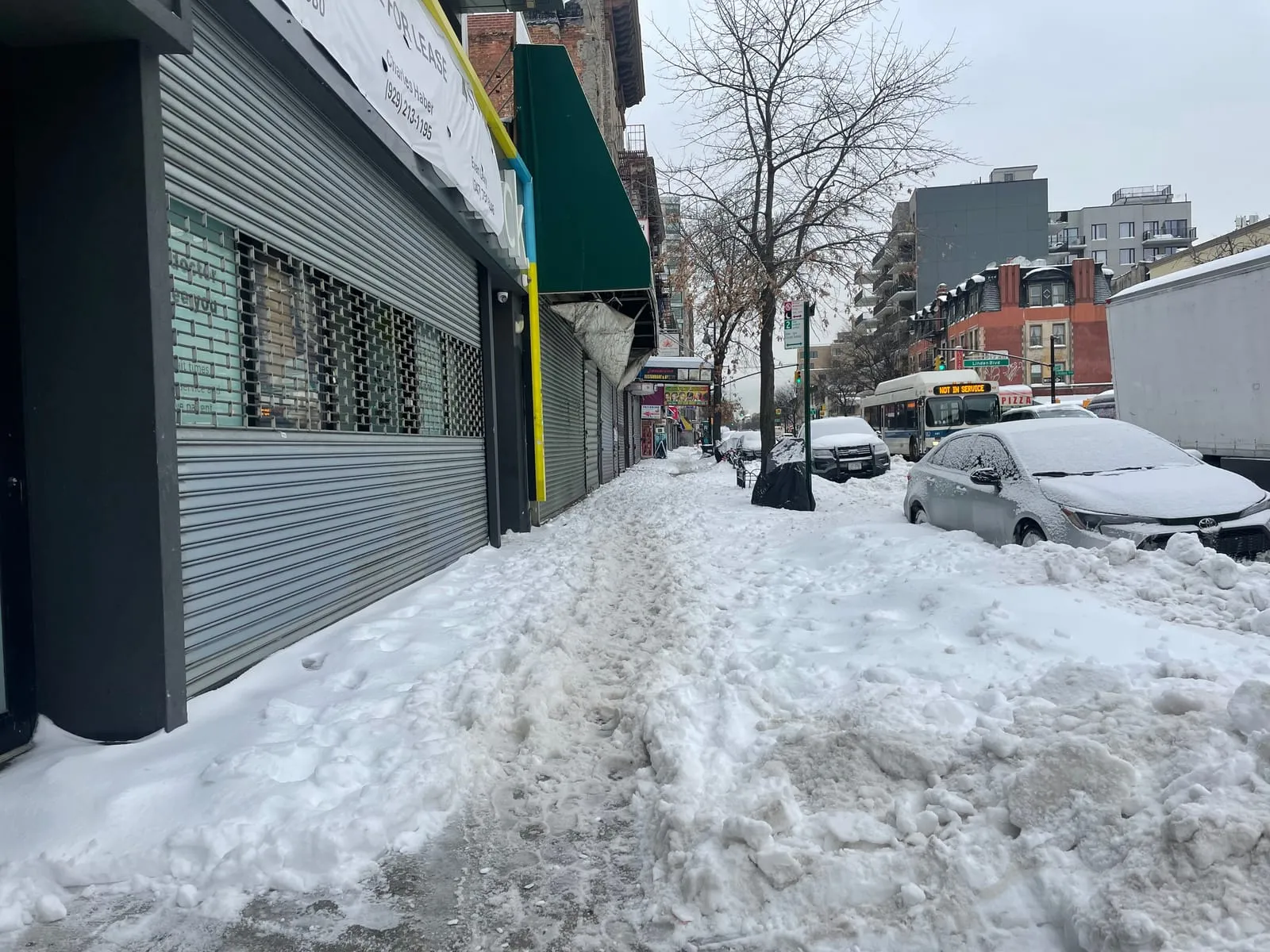

Quick answer: shovel first, then use a small amount of a urea-based melt like Morton Safe-T-Pet or Safe Paw for ordinary cold. Morton’s melt stops working below 10°F [4], so on colder mornings switch to sand for traction. If your dog walks on salted city sidewalks, boots do more than any product you put on your own stoop.
New York City puts sidewalk clearing on property owners, on a tight clock. If snow stops between 7 a.m. and 5 p.m., you have 4 hours; between 5 p.m. and 9 p.m., 14 hours; overnight, until 11 a.m. [1]. The city also says to spread salt, sand or other granular material if the ground is frozen, and not to push snow into the street, crosswalk or bike lane [1].
Why it matters in New York
- Clearing deadline
- 4 hours if snow stops 7 a.m. to 5 p.m. [1]
- Evening snow
- 14 hours if it stops 5 p.m. to 9 p.m.; by 11 a.m. if overnight [1]
- Path width
- At least 4 feet [1]
- EPA chloride limit for fresh water
- 230 mg/L long-term; 860 mg/L short-term [2]
- Pet poison help
- ASPCA Animal Poison Control, (888) 426-4435 [3]
How we chose
- What’s in it. The ASPCA says common ice melts contain sodium, potassium, calcium or magnesium chloride, and that pet-friendly products typically use urea or magnesium chloride instead [3]. We picked products that name their main ingredient or say they’re chloride-free.
- Melting temperature, from the maker. Where the maker publishes the lowest temperature it works at, we list it. One maker doesn’t, and we say so.
- No overpromising. “Pet safe” and “pet friendly” are the makers’ own words, not a government certification. We report them as claims.
- Recall check. We searched the CPSC recall database for each brand on November 2, 2026, and found no recalls for these products [7].
Our picks
Best for: Stoops and short walks in typical city cold
Morton Safe-T-Pet Ice Melt (8 lb.)
Salt- and chloride-free, from a large salt company that publishes a safety data sheet for it.
- Salt and chloride free [4]
- Melts down to 10°F [4]
- 8 lb. jug [4]
- Maker describes it as veterinarian-recommended and safer for paws than plain salt [4]
Safety check: No CPSC recall found for Morton ice melts (checked 2026-11-02). The ASPCA notes urea-based melts can still upset a pet's stomach.
Watch out: Stops working below 10°F, which a New York cold snap can reach. Morton says it isn't sold in California or Virginia.
See it on Amazon → We chose it from specs and safety records; we haven't tested it ourselves.
Best for: Homes where pets or kids are around the steps
Safe Paw Ice Melter (8 lb. jug)
The maker says it contains no salt and no chlorides, which keeps chloride off your steps and out of the storm drain.
- No salt, no chlorides, per the maker [5]
- Granules the maker says bore through ice in about 10 minutes [5]
- Made and assembled in the USA, per the maker [5]
Safety check: Safe Paw's site cites no third-party certification for its “100% pet safe” claim. CPSC recall search found no recall (checked 2026-11-02).
Watch out: The maker's page doesn't list ingredients or the lowest temperature it works at; retailer listings disagree with each other, so check the label.
See it on Amazon → We chose it from specs and safety records; we haven't tested it ourselves.
Best for: Dogs walking on salted city sidewalks
Ruffwear Polar Trex Winter Dog Boots (set of 2)
You only control the ice melt on your own stoop. Everywhere else your dog walks, boots keep salt and chemicals off its paws.
- Rubber outsole with winter traction lugs for snow and ice [6]
- Hook-and-loop closure with a stretch gaiter to keep snow out [6]
- Sold in sets of two; front and rear sized separately [6]
Safety check: Not an electrical product, so no listing applies. CPSC recall search found no Ruffwear recall (checked 2026-11-02).
Watch out: Sold in pairs, so a full set means buying two. Many dogs need time to get used to boots.
See it on Amazon → We chose it from specs and safety records; we haven't tested it ourselves.
Buying guide
- Clear first, then melt. Shoveling down to the pavement means you need far less product, and only spread where people walk.
- Follow the label’s spreading rate. Anything extra washes toward the storm drain. That matters because chloride harms fresh water above the EPA’s 230 mg/L criterion [2].
- Match the product to the temperature. A melt rated to 10°F won’t do anything on a 0°F morning; switch to sand for traction.
- Wipe paws at the door. The ASPCA says to wipe your pet’s paws with a damp cloth or baby wipes as soon as you come inside [3].
- Store it out of reach. Keep jugs and bags where pets and children can’t get into them.
Sources
- NYC 311: Snow or Ice on Sidewalk
- U.S. EPA: National Recommended Water Quality Criteria, Aquatic Life Criteria Table (chloride)
- ASPCA: Keeping Pets Safe during Winter: The Dangers of Ice Melts
- Morton Salt: Safe-T-Pet Ice Melt
- Safe Paw: Ice Melter
- Ruffwear: Polar Trex Winter Dog Boots
- U.S. Consumer Product Safety Commission: Recalls database (searched Nov. 2, 2026)
Common questions
How long do I have to clear my sidewalk in New York City?
If snow stops between 7 a.m. and 5 p.m., within 4 hours. Between 5 p.m. and 9 p.m., within 14 hours. Between 9 p.m. and 7 a.m., by 11 a.m. The path must be at least 4 feet wide.
Is 'pet safe' ice melt completely safe for dogs?
No product is risk-free. The ASPCA says pet-friendly ice melts typically contain urea or magnesium chloride and may still cause stomach upset. Wipe your dog's paws when you come inside, and call a vet or the ASPCA Animal Poison Control Center at (888) 426-4435 if your pet eats ice melt or shows symptoms.
Why does chloride in ice melt matter?
Chloride from salt washes into streams and lakes. The EPA's freshwater criterion for chloride is 230 mg/L for long-term exposure, and higher concentrations harm aquatic life. Clearing snow first and spreading only what you need keeps more of it out of the water.