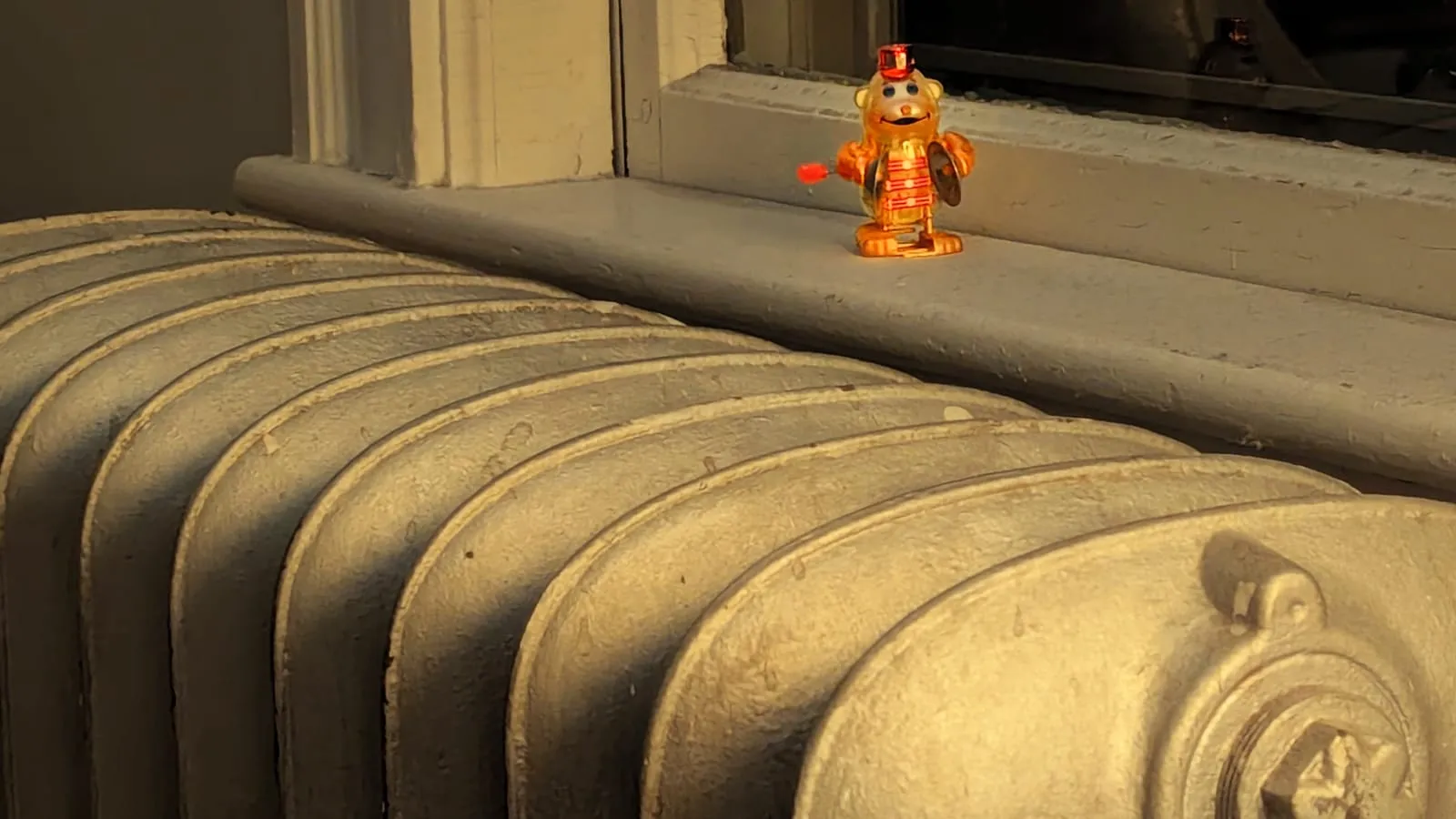

Quick answer: for a large or open-plan apartment, the Vornado Evap40 or Levoit Superior 6000S evaporative models cover the space without putting a visible mist into the air. Whichever you choose, add a cheap humidity gauge so you don’t overshoot 50 percent [2].
In New York City, building owners must keep the heat on through a long season: from October 1 to May 31, apartments must be at least 68°F in the daytime when it’s below 55°F outside, and at least 62°F overnight no matter the weather [1]. That’s eight months of radiators running, and heated winter air tends to feel dry. A humidifier helps, but only if it’s kept clean and set to a sensible level.
Why it matters in New York
- NYC heat season
- October 1 to May 31 [1]
- Required daytime heat
- 68°F when it's below 55°F outside, 6 a.m. to 10 p.m. [1]
- Required overnight heat
- 62°F, regardless of outside temperature [1]
- EPA humidity ceiling
- Don't humidify above 50% relative humidity [2]
- EPA cleaning schedule
- Empty and refill daily; clean every third day [2]
If your apartment is too cold rather than too dry, that’s a different problem: the city says to contact your landlord first, then call 311 [1].
How we chose
- Type matters for air quality. The EPA says ultrasonic and impeller (cool-mist) humidifiers release more minerals and microorganisms into the air than evaporative units and steam vaporizers do, though any type can grow microbes if water sits in it [2]. Both of our humidifier picks are evaporative.
- Humidity control. We favored models with a built-in humidistat or auto mode, since the EPA’s main warning is against going over 50 percent [2].
- Size for the space. We list the maker’s room-size rating so you can match it to your apartment.
- Recall check. We searched the CPSC recall database for each brand and model on November 2, 2026 [6].
- No star ratings or prices. Prices change constantly; ratings aren’t something we can verify.
Our picks
Best for: Large or open-plan apartments
Vornado Evap40 Evaporative Humidifier
An evaporative unit, the type the EPA says disperses fewer minerals and microbes than ultrasonic models. It has a built-in humidistat, so you can set a target level and let it cycle.
- 4-gallon capacity; up to 4 gallons of output in 24 hours on high [3]
- Rated for rooms up to 1,000 sq. ft. [3]
- 3 fan speeds; built-in humidistat [3]
- 2 humidifying filters included [3]
Safety check: Vornado's product page does not list a safety certification. CPSC recall search found no recall for the Evap40 (checked 2026-11-02); Vornado's recent recalls were heaters, steam irons and garment steamers, not this model.
Watch out: Evaporative wicks need replacing, which is an ongoing cost. It's a large unit for a small bedroom.
See it on Amazon → We chose it from specs and safety records; we haven't tested it ourselves.
Best for: Big apartments and lofts
Levoit Superior 6000S Smart Evaporative Humidifier
A large evaporative model with no wet mist. Its 6-gallon tank means less carrying water from the kitchen sink.
- 6-gallon (22.7 L) tank [4]
- Evaporative, with built-in wick filters [4]
- Rated for up to 3,000 sq. ft. [4]
- Up to 72 hours on the low fan setting [4]
- 2-year limited warranty [4]
Safety check: Levoit's product page does not list a safety certification. CPSC recall search found no Levoit humidifier recall (checked 2026-11-02).
Watch out: More capacity than most New York apartments need, and a full 6-gallon tank is heavy. The product page doesn't mention an auto mode or a humidistat, so pair it with a humidity gauge.
See it on Amazon → We chose it from specs and safety records; we haven't tested it ourselves.
Best for: Knowing when to turn the humidifier down
ThermoPro TP50 Indoor Hygrometer (now sold as TempPro)
The EPA's main rule is to stay at or below 50 percent humidity. A gauge tells you where you are, and it's cheaper than any humidifier.
- Humidity range 10% to 99%; ±2% accuracy from 30% to 80% [5]
- Temperature accuracy ±1°F [5]
- Shows Dry, Comfortable or Wet [5]
- Runs on one AAA battery [5]
Safety check: Battery-powered, so no electrical listing applies. CPSC recall search found no recall for ThermoPro or TempPro (checked 2026-11-02).
Watch out: The brand is changing from ThermoPro to TempPro, so packaging may show either name. The maker's own page is inconsistent about whether the screen is backlit.
See it on Amazon → We chose it from specs and safety records; we haven't tested it ourselves.
Buying guide
- Evaporative or ultrasonic? Evaporative units put less mineral dust and fewer microbes into the air, but they use wicks you have to replace. Ultrasonic units are quiet and compact, but need distilled water to avoid white dust [2].
- Watch the windows. If you see condensation on windows or walls, the room is too humid. Turn it down or run it less [2].
- Keep it off the carpet. The EPA says not to let the area around a humidifier get damp, including carpets and drapes [2].
- Clean on a schedule. Daily empty-and-refill and a scrub every third day, per the EPA [2]. If you live with someone who has asthma or allergies, take this part seriously.
Sources
- NYC Department of Housing Preservation and Development: Heat and Hot Water Information
- U.S. EPA: Use and Care of Home Humidifiers
- Vornado: Evap40 Evaporative Humidifier
- Levoit: Superior 6000S Smart Evaporative Humidifier
- TempPro: TP50 Digital Indoor Hygrometer Thermometer
- U.S. Consumer Product Safety Commission: Recalls database (searched Nov. 2, 2026)
Common questions
What humidity should I aim for in a New York apartment in winter?
The EPA says not to humidify above 50 percent relative humidity. If water starts condensing on windows or walls, turn the humidifier down, move it, or run it less.
Should I use tap water in my humidifier?
The EPA recommends low-mineral water such as distilled water, especially in ultrasonic and impeller models, which can spread minerals from tap water as a fine white dust.
How often should I clean a humidifier?
For portable units, the EPA says to empty, wipe dry and refill daily, and to clean every third day. Unplug the unit first, and store it clean and dry at the end of the season.